
At the 3rd Law CMU International Conference August 16th, 2024. Chiang Mai, Thailand.
President of Chiang Mai University, Associate Dean of the Faculty of Law, Chairperson of the Law CMU International Conference 2024, distinguished guests and scholar, participants, and fellow activists, it is an honor to stand before you today to discuss environmental justice. This issue is deeply interwoven with the very fabric of our society, our livelihoods, and our futures during a time of multiple global crises that are exacerbating each other to create what is known as a “polycrisis.” [1]
Let me begin with my personal journey.
I have had the once-in-a-lifetime experience of witnessing an area widely recognized as one of the world’s worst “sacrifice zones,” [2] a region so severely contaminated that it has catastrophic effects on the health of people living near massive industrial facilities, chemical plants, and fossil fuel extraction or processing sites. These residents are routinely exposed to deadly toxic chemicals.
Sacrifice zones are also characterized by low property values and disinvestment, along with low-income, underprivileged, and often racialized residents. People living in these areas are frequently “exploited, traumatized, and stigmatized” and considered “disposable, with their voices ignored, their presence excluded from decision-making processes, and their dignity and human rights trampled upon,” as stated by the UN Special Rapporteur in 2022 [3].
Stretching 137 kilometers along the Mississippi River from Baton Rouge to New Orleans, “Cancer Alley” is home to about 200 petrochemical plants and refineries, accounting for 25% of the petrochemical industry in the United States. The United Nations Human Rights Council’s human rights experts have called the development of petrochemical complexes a form of environmental racism, issuing a statement expressing “serious concerns” about the increased industrialization of Cancer Alley in Louisiana. This statement follows years of campaigning by Louisiana citizens and a letter submitted in 2020 to the United Nations Special Rapporteur on contemporary forms of racism, racial discrimination, xenophobia, and related intolerance by Loyola law students..
The latest Human Rights Watch report, *We’re Dying Here: The Fight for Life in a Louisiana Fossil Fuel Sacrifice Zone*[4], published earlier this year, highlights how residents of Cancer Alley suffer from extreme pollution caused by the fossil fuel and petrochemical industry. They face elevated risks of cancer, respiratory diseases, and harm to maternal, reproductive, and newborn health. Due to industrial air pollution, parts of Cancer Alley have the highest cancer risk in the United States, with Black residents disproportionately affected by these adverse consequences.
In 1999, during the peak of environmental protection and civil rights campaigns that were merging to form the environmental justice movement, I was there in Cancer Alley. We organized skill-sharing among movement members in response to the constant threat of toxic pollution in minority and low-income areas.
Anne Rolfes, inspired by the residents of Nigeria’s Niger Delta confronting the ongoing destruction caused by gas flaring and oil production, worked in Benin, West Africa. There, she documented the stories of Nigerians attacked and forced to leave their country due to their struggle for justice from the oil industry. Upon returning to Louisiana, Anne developed a tool known as the “bucket” and launched the Louisiana Bucket Brigade. In 2000, the Brigade documented over 100 air samples and 150 violations of state and federal health criteria, marking the highest community-gathered record of hazardous exposure in Louisiana at the time. These records formed the largest database of community-collected air sampling data in the United States.
Later approved by the USEPA, the “bucket” became a simple, user-friendly tool for fence-line communities to conduct air sample collection operations. The data generated from these samples, capturing emissions from within the most affected areas, is as reliable as monitoring data from the USEPA. For community residents accustomed to being ignored, neglected, and mistreated by corporations and government, the bucket brigade has proven to be a powerful tool and experience. It has also inspired communities in Kenya, South Africa, Russia, India, and Thailand.
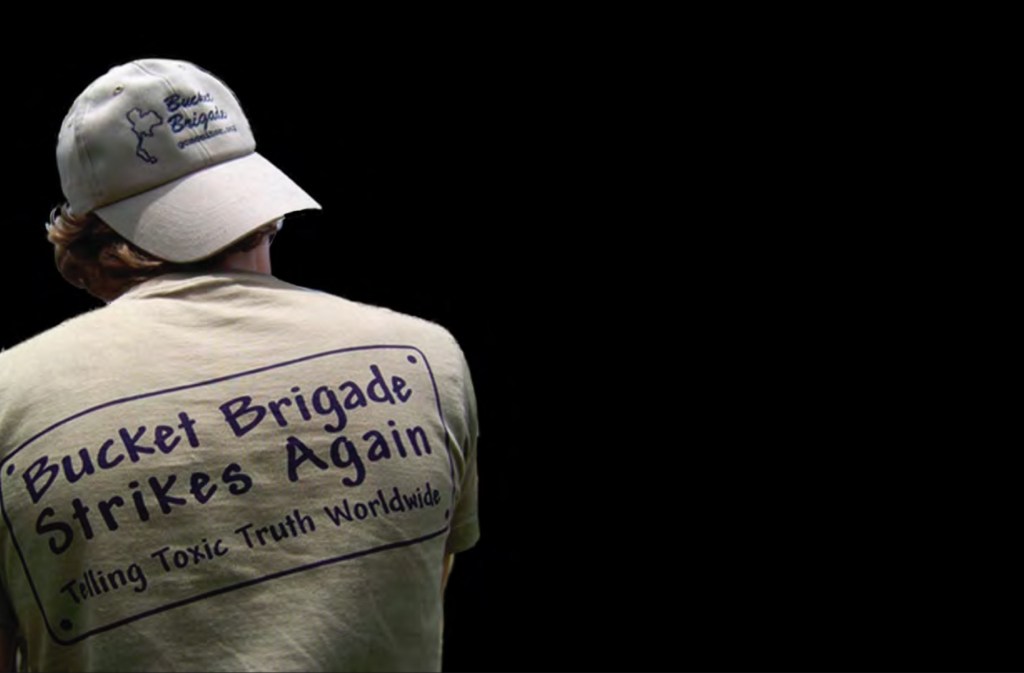
In 2003, we introduced the bucket to communities in Map Ta Phut, home to Thailand’s largest petrochemical and oil and gas sector. Like fence-line communities worldwide, residents of Map Ta Phut suffer from exposure to a mix of toxic chemicals. They experience foul odors late at night and early in the morning, soot, ash, and dust on their property, thick black smoke blanketing the neighborhood, contaminated drinking water, and unexplained illnesses. Map Ta Phut also has one of the highest cancer rates among Thai populations.
By collecting air samples during pollution events, the Bucket Brigade successfully documents pollution episodes, helping communities establish benchmarks for air quality in their areas. In 2005, Thailand’s Pollution Control Board approved a weak regulation aimed at reducing some cancer-causing volatile organic chemicals in industrial zones.
Since 2013, Thailand has implemented the Pollutant Release and Transfer Register (PRTR) pilot project to address industrial pollution in Map Ta Phut. After a decade, all parties involved agree that the PRTR system has the potential to effectively manage environmental emergencies and regulate industries and pollution sources. However, corporate and political interests have long prioritized their own agendas over public health, social justice, and environmental integrity. We are still awaiting whether the Prime Minister of Thailand will present the proposed PRTR law to the House of Representatives.
In December 2002, I stood in the shadow of an abandoned chemical plant in Bhopal, India, a site infamous for one of the darkest moments in industrial history. I was with volunteers, survivors, and activists from fourteen countries, united under the International Campaign for Justice in Bhopal. We had come together to launch a cleanup operation and address the deadly chemical waste that had plagued the community for two decades.
Bhopal remains the site of the world’s worst industrial disaster. On the night of December 3, 1984, a Union Carbide chemical plant released 40 tonnes of highly toxic methyl isocyanate into the air. The gas quickly spread through the city as thousands slept, resulting in immediate loss of thousands of lives and a rising death toll in the days and years that followed. The disaster left behind a nightmare: families torn apart, communities devastated, and a lasting legacy of pain and suffering.
The abandoned factory site turned into a toxic wasteland, with poisons seeping into the soil and water, thereby contaminating essential community resources. Greenpeace conducted a scientific analysis of the area from 1999 to 2004, uncovering widespread contamination[5]. Another study revealed alarming findings: the land and groundwater were heavily polluted, with mercury levels in some areas reaching 6,000,000 times the normal levels[6]. Additionally, drinking water wells near the factory were contaminated with chemicals associated with cancer and genetic abnormalities.
Despite the overwhelming evidence, justice and remediation remained elusive. In December 2002, we joined the people of Bhopal in solidarity, confronting the magnitude of the disaster as we began our cleanup efforts. Our work was soon interrupted by authorities, leading to our arrest. Yet, standing with fellow activists and survivors, I felt the strength of our collective resolve to defend the people of Bhopal and their right to a safe and healthy environment.
Already four decades today, the toxic legacy persists. Survivors still face chronic illnesses and urgent medical needs. Thousands of survivors and children born since the disaster continue to suffer from debilitating conditions, with many unable to work. The abandoned chemical plant remains a source of contamination, poisoning groundwater essential to nearby residents’ livelihoods.
The Bhopal tragedy served as a wake-up call for industries worldwide, highlighting the urgent need for strict regulations on chemical management and emergency response. This tragedy led to the enactment of the Emergency Planning and Community Right-to-Know Act in the United States in 1986. Part of the Superfund Amendments, this law established the Toxics Release Inventory, which requires industries to disclose information about hazardous chemicals used in their processes and supply chains. By empowering communities with the right to know, this law helped increase accountability for corporate polluters.
In Europe, the disaster inspired the adoption of the Aarhus Convention in 1998, which focuses on access to information, public participation in decision-making, and access to justice in environmental matters. The convention’s Pollutant Release and Transfer Registers policy, implemented in 2009, is a legally binding international agreement that grants individuals rights to access environmental information, participate in decision-making, and seek justice. Together, these measures aim to address global issues such as climate change, biodiversity loss, pollution, and poverty eradication.
On the other hand, those in positions of political and economic power who are in responsible for cleanup efforts frequently appear to be paying lip service to the wake-up call. Corporate abuse is commonly concealed through greenwashing, which allows industries to refurbish their public image while concealing their actual environmental crimes.
Environmental Justice cannot be realized without social justice
Environmental justice cannot be achieved in isolation. The systems that perpetuate racial and economic inequality are the same ones that foster environmental injustice. Addressing the root causes—racism, economic disenfranchisement, and political marginalization—is essential. However, this presents significant challenges for Thailand’s environmental movement, especially for environmental NGOs.
Examined and observed by prominent anthropologist and political economist [7], the political developments of the past twenty years in Thailand,— including mass mobilisations, military coups, constitutional reforms, and irregular government—have reoriented the environmental movements in the country away from the activism of earlier years, towards a more reactionary posture.
It’s quoted “…especially environmental NGOs—have often tended to be “tools of the state, political opportunists, and enemies of democracy. They have become “a group of organisations that strengthened and allied with the government in exchange for their own survival without contemplating the future of the Thai society, while perceiving the quality of democracy no more relevant to their mission.” While the electoral system has become an ineffective approach to promote environmental protection, especially under authoritarian regime, NGOs no longer act as a watchdog over the way the government manages the environment and natural resources. This concluded to be “the end of environmental movements in Thailand.”
With political polarization in Thailand, civil society organizations often align with the elitist and military oligarchy, ignoring the voices of the most vulnerable and impacted communities. They have lost credibility in representing the fight for the people’s environmental and resource rights. To me, this compromises the very foundation of environmental justice.
This serves as a sobering reminder for fellow environmental justice activists, human rights defenders, and me that a healthy democracy is our unifying foundation for safeguarding people’s fundamental rights to health care, education, justice, food, and a healthy environment.
Environmental justice aims to address the systemic inequalities that have led to marginalized communities being disproportionately affected by ecological crises. As I mentioned earlier, these communities often live in sacrifice zones, near landfills, waste incinerators, mining and industrial sites, and contaminated land and waterways. On top of that, they also bear the brunt of the loss and damage caused by the climate crisis.
Still, Indigenous people, impacted communities, and the poorest of the poor in Thailand are taking a stand and have been inspiring others to fight against environmental injustice as it unfolds. Along side environmental justice activists, they have filed lawsuits using the UN business and human rights framework to challenge government negligence on air pollution both domestically and internationally. They have employed citizen science and local knowledge to oppose ill-advised and destructive mega development projects ; minings, fossil power plants and terminals, industrial and special economic zones, toxic waste dumping, to be name a few. They learn to develop legal defense strategies to combat strategic lawsuits against public participation (SLAPP). Additionally, they have utilized investigative research and journalism to expose corporate-government collusion and have addressed carbon offsetting schemes, land-grabbing, and extractivism as misleading solutions to the climate crisis.
The links between systemic racism and the environmental emergency are also evident in the exploitation and exclusion of experts, leaders and activists from impacted communities across the global South through initiatives which claim to mitigate the environmental emergency. This includes the dispossession of land in the global South to ‘offset’ carbon emissions, establish conservation reserves and build green technology.
Corporations, increasingly focused on net-zero targets, have devised plans to offset their emissions by paying others to absorb carbon dioxide. For instance, British multinational oil and gas company BP has launched the ‘Target Neutral’ program, which aims to reduce its customers’ carbon footprint by funding projects that decrease carbon dioxide emissions in the Global South.
Forest agencies in Thailand are pushing businesses to participate in reforestation projects in order to offset carbon emissions, therefore allowing them to ignore their damaging production practices. This is classic greenwashing. Nine out of ten carbon credits were given to investors by the Department of National Parks, Wildlife, and Plant Conservation, the Royal Forest Department, and the Department of Marine and Coastal Resources implementing benefit-sharing rules with corporate partners. This is actually “license to pollute”.
Local communities that protect the forest are often excluded from carbon credit forest management plans, even though these initiatives and the possibility of forest evictions directly affect them. For example, the ethnic Karen forest people in Lampang and Mae Hong Son provinces face the threat of eviction due to reforestation contracts between national parks and energy firms. [8]
In a report from February this year[9], Human Rights Watch researchers detail how the Wildlife Alliance and Cambodia’s Ministry of Environment have routinely violated the rights of the Indigenous Chong peoples, who have long inhabited the Cardamom Mountains.
The Wildlife Alliance and Cambodian government started the project without first contacting the Indigenous people who resided there, therefore breaching their right under international law to free, prior, and informed consent to initiatives on their land. The study also describes how Indigenous people were kept off of their land and sometimes imprisoned for gathering resin from trees.
The results show a more general trend worldwide whereby some of the most well-preserved landscapes are managed by Indigenous people and other traditional communities, yet they are constantly excluded and subjected to discrimination.
Environmental Justice and Climate Litigation
Climate justice is a growing global movement based on the belief that people have a right to a stable climate and deserve protection from the dangers of hazardous climate change. It is inextricably linked to environmental justice.
In principle, we can use the legal system to hold government authorities accountable and compel political leaders to uphold their duty to protect people’s human rights.
Climate litigation refers to lawsuits where climate change and its effects are either a contributing factor or a central element in legal arguments and decisions. Over the past decades, climate litigation has surged globally. According to a recent United Nations Environment Program report, as of March 2017, there were more than 654 cases filed in the United States and over 230 cases in other countries, using a broad definition of climate litigation. Since then, the number of cases has continued to increase rapidly.
Nearly seven years after launching its landmark National Inquiry on Climate Change, the Philippines Commission on Human Rights (CHR) published its final report in 2022(10). The original petition, submitted by Greenpeace Southeast Asia and individuals from across the Philippines, requested the Commission to investigate the impacts of climate change on the human rights of the Filipino people and to evaluate the role of 47 major fossil fuel producers (the Carbon Majors companies) in exacerbating the climate crisis, obstructing climate action, and contributing to related climate harms[11].
On this note, I believe that climate litigation is a key strategic move for environmental justice movement in Thailand. It empowers the public to hold accountable those responsible for climate change and to advocate for a different future in innovative and exploratory ways. It provides a platform for affected individuals and communities to mobilize and assert their human rights. Furthermore, it underscores the urgent need for governments and corporations to take decisive actions to protect and uphold people’s rights. Climate litigation is particularly vital now, as the current generation need to take a firm stand to tackle climate crisis and assert their moral and historical duties toward future generations.
Climate litigation could protect individual human rights and enhance climate policy both nationally and internationally. On the national level, strategic climate cases could lead to the adoption of more stringent targets for greenhouse gas reduction, adaptation measures, and addressing loss and damage. Internationally, such cases could collectively narrow the gap between inadequate national climate policies and the long-term objectives of the UNFCCC and the Paris Agreement.
A Future built on environmental justice[12]?
Holding Those Most Responsible to Account and Demanding Reparations
To achieve justice, those most responsible for the environmental crisis must be held accountable and pay their fair share of the damages and losses incurred. This means that during multilateral environmental agreements such as climate negotiations at COP29 and beyond, vulnerable nations should receive the funding already promised by wealthy nations—and more—for the loss and damage caused by climate impacts, as well as support for adaptation. Furthermore, international organizations with the necessary technological expertise are required to enable effective implementation.
Fair Distribution of Power and Wealth
To address the environmental crisis fairly, power and wealth have to be transferred to Indigenous Peoples, community leaders, activists, specialists from affected and marginalised communities of colour. Furthermore, their expertise and knowledge have to be focused on genuine solutions to climate crisis.
For some of the most important biomes on Earth, for instance, it is now well known that the knowledge and activities of Indigenous Peoples are essential. Unless Indigenous Peoples’ rights are safeguarded, recent studies reveal that the Paris climate targets to restrict global temperature rise to below 1.5 degrees would fail.
Shifting power calls for adapting policies and institutions that have continued damage as well as a redistribution of political power and resources including land, wealth, technology, and knowledge. Debt cancellation, transforms to international institutions, taxes that make polluters pay, so enabling more power or access for leaders, experts, and activists from affected communities in international negotiations, enactment of land rights and the patent-free sharing of green technologies with the global South.
Support a Just Transition.
We desperately need development that takes sustainability, equity, welfare, and rural communities into account if we are to avert climate change and further harm to people and loss of biodiversity. Around alternative concepts to advance based on the collective welfare of people and environment, space for new thinking is required. This helps to free economies from depending on drilling, logging, mining, dumping, or other activities that damage local people or Indigenous Peoples by means of natural exploitation.
Therefore, it is imperative that a fair transition to greener, more sustainable businesses and practices safeguards and redresses the rights of impacted workers and communities. This would call for workers and impacted communities fully engaging in determining the course and results. Should the changeover process be not just, the result will never be”.
A just transition would also assist in overcoming the growing disparities within our country. For instance, it would assist to solve the present cost of living crisis thereby guaranteeing access to sustainable food and energy for all.
Conclusion
The polycrisis is rapidly changing systems, around the world, be it the weather, geopolitics, economies, or migration, but it is also shifting how people feel and think. To this end, environmental justice movement need to go beyond business as usual.
Environmental justice and climate action can lost support if one realised the methods for bringing about change are obsolete and useless and caused more harm than benefit. Two new approaches we can take into consideration for environmental justice activism in the polycrisis ;
The first is to engage emotions, focusing on three critical emotional shifts : Dissolve denial, Transform powerlessness into agency and Transform anger into action.
The second is to consciously shape the new emerging narratives as people’s mindsets or worldviews transform towards dominant narratives.
Last but not least, as our friends at Mindworks[13], group established with a bold mission – using the rich insights from cognitive and social science to revolutionise how organisations design and implement campaigns, put it “in the Anthropocene, humanity’s psychological crisis will shape the future of the planet. “Campaigning, advocating, and change-making” during these turbulent times involves clearly charting a course toward new narratives while navigating the rapids of anger and the keeper holes of denial”.
Thank you.
Endnote :
[1] https://polycrisis.org
[2] Sacrifice Zone 101 https://www.climaterealityproject.org/sacrifice-zones. Sacrifice Zone : A Genealogy and Analysis of an Environmental Justice Concept https://doi.org/10.1215/22011919-10216129.
[3] https://www.amnesty.org/en/latest/news/2024/03/global-dows-failure-to-offer-remedy-for-the-bhopal-disaster-has-created-a-sacrifice-zone/
[4] We’re Dying Here’: The Fight for Life in a Louisiana Fossil Fuel Sacrifice Zone https://www.hrw.org/report/2024/01/25/were-dying-here/fight-life-louisiana-fossil-fuel-sacrifice-zone
[5] https://www.bhopal.net/wp-content/uploads/2024/04/ICJB-Submission-to-UN-Special-Rapporteur-on-Toxics-29-March-2024.pdf
[6] https://www.greenpeace.org/static/planet4-netherlands-stateless/2018/06/corporate-crimes-the-need-fo.pdf
[7] https://www.academia.edu/49051848/State_NGOs_and_Villagers_How_the_Thai_Environmental_Movement_Fell_Silent
[8] https://www.bangkokpost.com/opinion/opinion/2768219/hidden-realities-of-carbon-credits
[9] https://www.hrw.org/news/2024/02/28/cambodia-carbon-offsetting-project-violates-indigenous-groups-rights
[10] https://www.ciel.org/wp-content/uploads/2023/02/CHRP-NICC-Report-2022.pdf
[11] https://www.ciel.org/news/philippines-commission-on-human-rights-releases-systematic-and-searing-indictment-of-the-carbon-majors-a-stark-warning-to-the-financial-sector-and-a-vital-new-tool-for-courts-and-human-rights-bodies/
[12] https://www.greenpeace.org.uk/challenges/environmental-justice/race-environmental-emergency-report/
[13] https://mindworkslab.org
 Taragraphies