
Note : This is the essay of a young man who once lived in the highlands of Chiang Rai province several decades ago. This essay does not intend to defame anyone in the current government, led by Prime Minister Paetongtarn Shinawatra. While some parts may seem critical, please do not take offense—consider it instead as the voice of a citizen yearning for environmental justice in Thai society, even though the road to achieving that justice remains far away.
The first thing I would do is revisit the government’s policy statement delivered to Parliament on September 12, 2024. At the very least, I would review it to assess how well it reflects the current environmental realities—or whether it was merely political rhetoric. I believe such a statement acts as a mirror of government leadership, especially when defending policies against opposition scrutiny in Parliament.
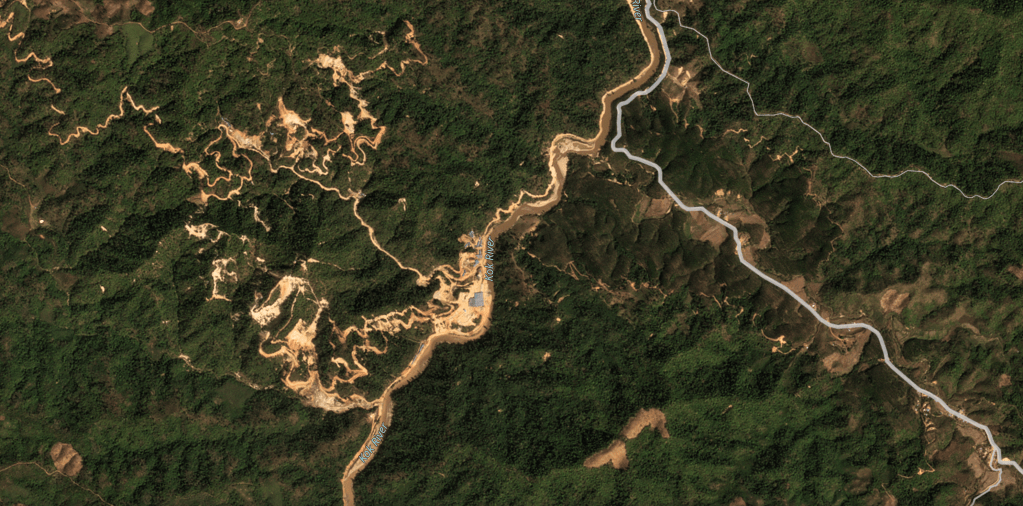
I would consider amending that policy statement to include the transboundary pollution crisis from illegal mines in the Kok and Sai River basins—a crisis that is severe, sensitive, and complex. I also want to deepen my understanding of the political landscape in southern Shan State.
Second, I would convene an urgent Cabinet meeting to place the transboundary pollution crisis on the agenda. I would direct the Office of the Prime Minister—starting with agencies directly under the PM’s supervision, whether directly or indirectly involved—and summon relevant ministers, especially the Minister of Natural Resources and Environment and the ASEAN Affairs Department under the Ministry of Foreign Affairs. Together, we would lay everything on the table and explore the full toolbox of executive powers—laws, budgets, agreements, and international commitments made by Thailand at regional and global levels. The ultimate goal is to solve the pollution crisis at its root cause and protect the health of the people of Chiang Rai.
As for my deputy PM’s public proposal to build a sediment-trapping dam—I have no idea what part of the brain that idea came from.
I would establish a special task force, including representatives from Chiang Rai’s civil society and academic experts. Let’s call it the Avengers Team. It doesn’t need to be large, but its members must have strong public spirit. This team won’t operate like a traditional bureaucracy—no half-hearted measures, no attention-seeking ceremonial events.
Third, I believe I, as Prime Minister, must have an advisor on environmental justice or climate justice. A Prime Minister doesn’t need to know everything.
What I want to understand is the matter of industry codes of conduct, ethics, and standards—these are the frameworks that businesses are supposed to follow. But the gold and rare earth mines in southern Shan State are utterly lawless and unregulated. There are no voluntary measures to control the mineral supply chain, and no meaningful protections for communities in the Kok, Sai, Ruak, or Mekong river basins—let alone the ecosystems of these rivers.
I would assign our Avengers Team to investigate the supply chains of mining operations in southern Shan State—especially those impacting the Kok and Sai Rivers. Once we obtain that information, I would leverage both bilateral platforms (Thailand-Myanmar, Thailand-China) and multilateral ones (ASEAN, ASEAN+China, ASEAN+3). I believe ASEAN must revisit its principle of non-intervention in light of this transboundary pollution crisis. We could draw from ASEAN’s Five-Point Consensus or the Do No Harm principle (D4D) applied in the Myanmar conflict—even if Myanmar tries to avoid engagement.
Once we have mapped out the mining supply chains in the Kok and Sai River basins, I would implement import restrictions into Thailand. If the materials are being exported to China, that’s another matter we’d need to address in bilateral talks.
Import bans must be enforced—unless importers can provide sufficient evidence that the products are not linked to human rights violations, conflict, or corruption, and that they were legally produced. The same standard must apply at the Mae Sai border checkpoint.
When it comes to legislation, people often say it takes time. But in truth, I’ve pushed several laws through quickly. So for this crisis, I’ll recruit a team to help me look into the OECD’s Due Diligence Guidance for Responsible Supply Chains of Minerals from Conflict-Affected and High-Risk Areas to identify what approaches can be adapted.
Lastly, I will use the upcoming ASEAN Summit in Kuala Lumpur as a platform to seek solutions to the transboundary pollution crisis caused by illegal mining in the Kok and Sai River basins. I will step onto that stage with pride—as the leader of a founding ASEAN member —and push for an ASEAN framework on environmental rights that provides concrete mechanisms for seriously addressing transboundary pollution.
 Taragraphies